Moneyball for Main Street: The Fund That Bets on Singles, Not Home Runs
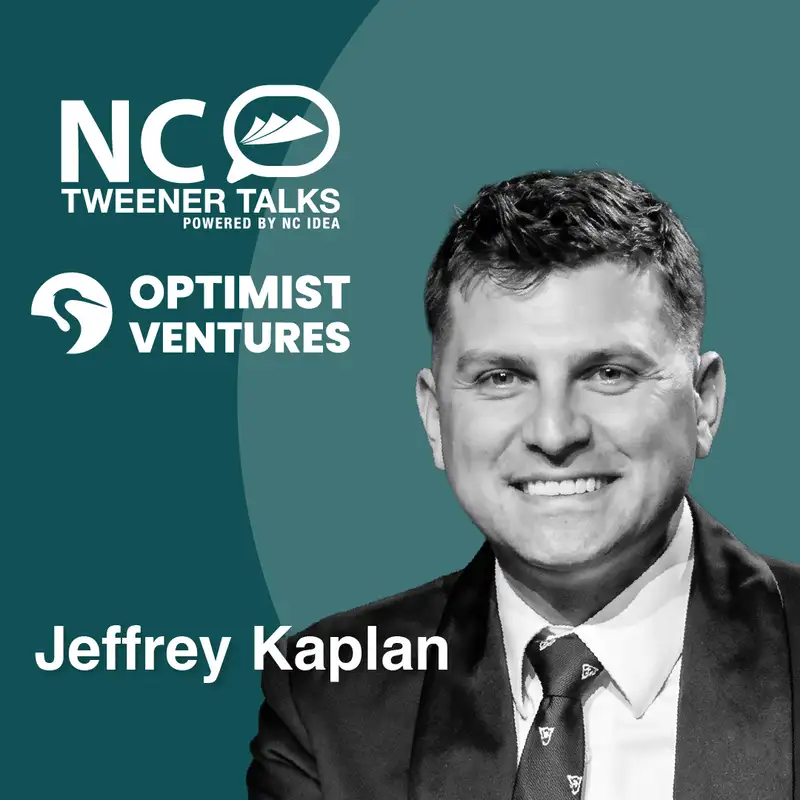
Most of us know Asheville as beer city, foodtopia, a playground for retirees and 14 million visitors a year. Jeffrey opens by updating that picture. Eighteen months out from Hurricane Helene, which hit on a Friday in late September 2024, the data is starting to come in. The long-term employment hit was about half that of COVID. Decades of population growth stopped in 2025 and even declined for the first time, but the in-migration that remains is now strongest among 25-to-34-year-olds: prime working-age professionals, not retirees. Jeffrey walks through what’s back (Biltmore Village, the River Arts District, High Wire’s new year-round pickleball courts) and what’s gone forever, and lands on a word he keeps coming back to: optimism.
From there, we steer into the heart of the episode: Optimist Ventures and the funding mechanism Jeffrey invented, the SPA note. The origin story is its own lesson in adaptation. Optimist began as a half-million-dollar grant from the Dogwood Health Trust. Then Helene hit, and within the same week a founder in the program, Ginger Frank of Poppy Popcorn, called wanting to commit $100,000, but to a grant program, not a fund. Rather than walk away, Jeffrey spent days thinking until he landed on a hybrid: half the capital as grants and philanthropy, half in a for-profit vehicle for accredited investors, with every for-profit dollar matched by a donation.
Boom: enter the SPA or shared profit agreement.
The conversation closes on what’s next, whether this model can scale to Charlotte or Raleigh, and a heartfelt ask about how the rest of the state can help Asheville finish its recovery.
Highlights
- Moneyball the Portfolio: Instead of chasing one home run, Jeffrey set out to build a book of “singles and doubles”… companies that just need to survive six years.
- The VC / Ecosystem-Builder Dissonance: An ecosystem builder is measured on jobs and revenue creation, not outlier exits.
- The SPA Note, Decoded: A “Shared Profit Agreement” combines a SAFE capped at 3.6% of a $1M valuation with a shared earnings agreement.
- The Investor Pitch: Every LP dollar is matched by a donation. But the real sell is community impact.
- Applied Technology vs. Developing Technology: The program defines “tech-enabled” broadly.
- The Funding Runway: Approximately $225M is flowing into the region through HUD programs, with $17M dedicated to small-business grants.
- A Curriculum Built on Competencies, Not Basics: The accelerator is built around entrepreneurial competencies, including opportunity recognition, resilience, and network-building.
- The North Carolina Hallmark: “It’s not a zero-sum game. We’re all trying to grow the size of the pie.”
The best founders, and the best fund builders, figure out the structure nobody else was willing to be patient enough to design. Jeffrey did exactly that. Enjoy the conversation.
Timestamps
01:52 Scot's intro: SPAs, Asheville, and a new funding mechanism
04:31 Meet Jeffrey Kaplan
04:50 Asheville, the loading-dock office, and a Russian-nesting-doll of titles
06:31 Jeffrey's background: Florida, intrapreneurship, and Anthware
10:13 Eighteen months after Hurricane Helene
13:14 The economic data: jobs, population, and a younger in-migration
14:50 Is Biltmore Village back?
17:31 The River Arts District rebound
18:01 Asheville's startup ecosystem and why it's so CPG-heavy
21:21 The Fresh Market CEO and the "buy local" effect
22:42 Asheville's tech wins: Craft Peak, Sprin, Level.io, SDV
24:40 How Optimist Ventures came to be
25:19 The VC vs. ecosystem-builder cognitive dissonance
27:03 "Moneyball the portfolio": singles and doubles
27:36 The Dogwood grant and Ginger Frank's $100K call
29:41 Splitting the fund: grants plus a for-profit vehicle
30:26 The SPA note explained
31:42 The shared-earnings math and negative 10% interest
34:00 LP economics, the ~13% IRR, and private inurement
37:10 The $855K HUD grant: funded for four years
38:37 Inside the accelerator and "tech-enabled," broadly defined
39:37 Carolina Flowers and the $40K freezer
44:00 A curriculum built on entrepreneurial competencies
46:27 What's next: bigger cohorts, applications June 3
47:56 Can this model scale to Charlotte or Raleigh?
50:49 How the rest of the state can help Asheville
52:42 The connector: Asheville's collaborative ecosystem
Where to Find Jeffrey:
LinkedIn: https://www.linkedin.com/in/jeffdude/
Front Porch Optimist Ventures: https://www.optimistventures.co/
Where to Find Scot Wingo:
LinkedIn: https://www.linkedin.com/in/thescotwingo/
Tweener Times: https://www.tweenertimes.com/
X: https://x.com/scotwingo
---
This episode of Triangle Tweener Talks is hosted by Scot Wingo, presented and produced by NC Tweener Fund, with creative assets and design support from Walk West.
We couldn’t share posts like this without our amazing sponsors:
Platinum:
NC IDEA: https://ncidea.org
Gold Sponsors:
- Balentine: https://www.balentine.com/triangle-entrepreneurs
- EisnerAmpner: https://www.eisneramper.com
- Robinson Bradshaw: https://www.robinsonbradshaw.com
Silver Sponsors:
- Automated Consulting Group: https://automated.co
- Bank of America: https://business.bofa.com/en-us/content/technology-industry-group.html
------
Triangle Tweener Talks is sponsored by:
Triangle Tweener Talks is sponsored by:
- Atomic Object: https://atomicobject.com/