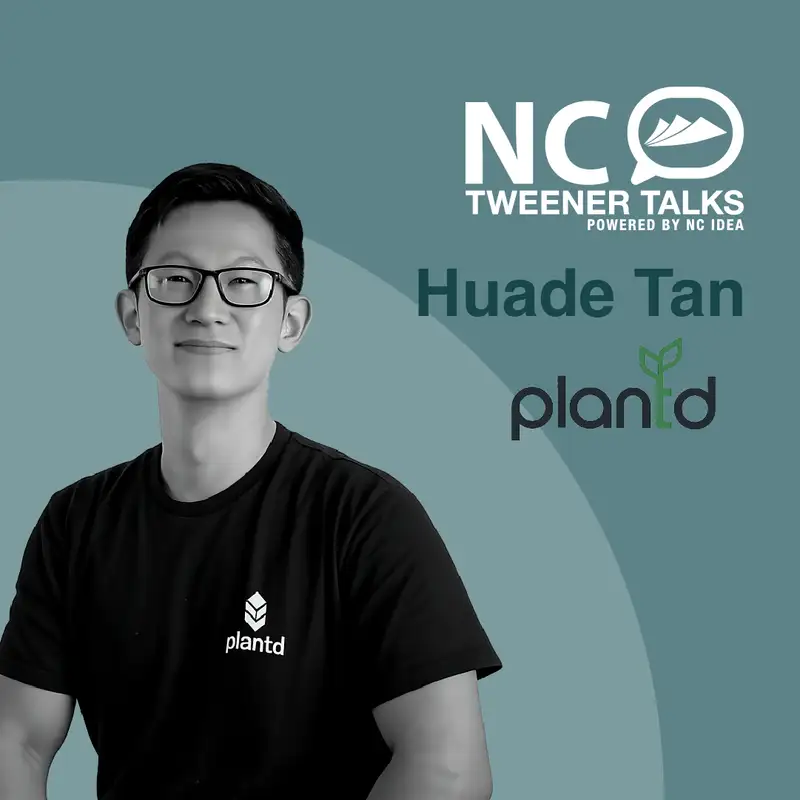
Plantd Co-founder, Huade Tan: Innovating Carbon Capture With Building Materials
Huade Tan, co-founder and CTO of Plantd, joins me to explain how two former SpaceX engineers ended up building carbon-capturing structural panels out of a North Carolina tobacco field. The conversation covers how Plantd chose its plant feedstock, why the team deliberately passed on the carbon-credit market in favor of a real product business, and what five years of hardware iteration looks like when you're building an industrial press that hasn't been attempted by a US company since the 1960s or '70s. Huade walks through the full process, from cloning a sterile perennial grass to harvesting it with a modified tobacco harvester to pressing it into finished building panels, and shares the numbers behind the business: $40 to $45 million raised from seed through Series B, and a 2024 deal with national homebuilder D.R. Horton to supply 10 million panels for roughly 90,000 homes. What sets this episode apart is how directly Huade connects his engineering background at SpaceX to the problems he's solving now, including a five-step framework for building hardware that the team is still applying today. It's a grounded, technical look at what it takes to build a genuine hardware moat in an industry that hasn't seen real innovation in decades
Timestamps:
00:00 Cold open
Timestamps:
00:00 Cold open
00:23 Thank you to our sponsors: NC Idea, Ballentine, Bank of America
01:31 Welcome to the episode: introducing Huade Tan and Plantd
01:57 The pitch: two SpaceX engineers, carbon capture, and plywood-like panels
03:34 Huade joins the show
04:01 Huade's background: building life support systems for Crew Dragon at SpaceX
05:27 Education path and Nathan's aerospace background
06:39 Why North Carolina: population growth trends since 2018
07:34 From Crew Dragon's "bubble" to the idea for Plantd
10:14 The founding question: what do you build from captured carbon?
12:23 Why Plantd passed on the carbon credit market
14:14 What didn't work early on
16:03 The market gap: moisture damage in existing building materials
17:15 Simplifying it: how a plant becomes a structural panel
19:00 Finding the right fiber: hemp, wheat straw, bagasse, and more
21:15 The perennial grass: sterile, cloned, and drought-resistant
24:01 400–500 acres established in North Carolina tobacco fields
27:22 Harvesting and the strander: turning stalks into fiber
29:48 Inside the press: resin, heat, and pressure
30:37 Press specs: 15 feet wide, 70 feet long, a quarter-million panels a year
37:09 The 5-step SpaceX engineering framework
39:43 Funding: $40–45 million raised, seed through Series B
41:21 The D.R. Horton partnership and what it taught them
45:04 The 2024 deal: 10 million panels, 90,000 homes, 165,000 tons of CO2
46:04 From hand-made coffee coasters to a real house in Durham
51:36 Why North Carolina: cost, talent, and agricultural infrastructure
53:36 What's next: furniture, biochar, and other verticals
55:00 Where to find Plantd
55:20 Closing and credits
-----
Where to Find Huade Tan:
LinkedIn: https://www.linkedin.com/in/huadetan/
Plantd: https://plantdmaterials.com
Where to Find Scot Wingo:
LinkedIn: https://www.linkedin.com/in/thescotwingo/
Tweener Times: https://www.tweenertimes.com/
X: https://x.com/scotwingo
---
This episode of Triangle Tweener Talks is hosted by Scot Wingo, presented and produced by NC Tweener Fund, with creative assets and design support from Walk West.
We couldn’t share posts like this without our amazing sponsors:
Platinum:
NC IDEA: https://ncidea.org
Gold Sponsors:
- Balentine: https://www.balentine.com/triangle-entrepreneurs
- EisnerAmpner: https://www.eisneramper.com
- Robinson Bradshaw: https://www.robinsonbradshaw.com
Silver Sponsors:
- Automated Consulting Group: https://automated.co
- Bank of America: https://business.bofa.com/en-us/content/technology-industry-group.html
------
Triangle Tweener Talks is sponsored by:
Triangle Tweener Talks is sponsored by:
- Atomic Object: https://atomicobject.com/